
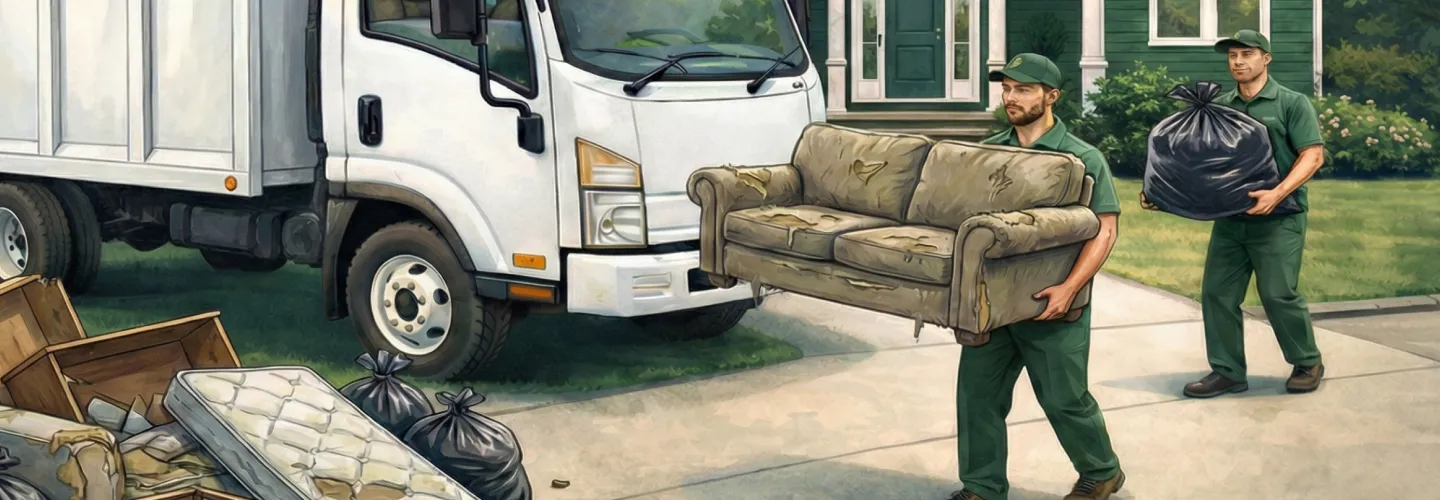
Sugar Hill Tire Disposal Services
Choose our tire disposal service for safe, responsible, and hassle-free removal—protecting your property and the environment with every pickup.
Get a Free QuoteOur Sugar Hill Junk Removal Services
Tire Disposal in Sugar Hill, GA – Local Service Guide
Proper tire disposal is essential for Sugar Hill residents and businesses, especially with the city’s focus on environmental responsibility. Whether you’re replacing tires after a busy summer of driving through neighborhoods like Barrington Estates or prepping for seasonal changes in Laurel Park, knowing your options is key. Most residential tire disposals are triggered by routine vehicle maintenance, storm damage, or garage cleanouts. Sugar Hill’s local guidelines require tires to be recycled or disposed of at approved facilities—curbside pickup does not accept tires, so plan ahead. For commercial properties near the Sugar Hill Town Center, tire disposal often follows fleet maintenance schedules or construction projects, requiring coordination for larger volumes. Specialty scenarios, such as estate cleanouts or property management turnovers, may need advance planning and adherence to city regulations. For more on local rules and resources, visit the Sugar Hill Public Works Department.
Key Considerations for Tire Disposal in Sugar Hill
- Confirm local disposal channels—curbside pickup does not accept tires
- Schedule pickups or drop-offs around seasonal cleanouts or vehicle replacements
- Check if permits or documentation are needed for bulk or commercial loads
- Ensure easy access for removal, especially in neighborhoods with narrow drives
- Coordinate with city-approved facilities for large volumes or specialty projects
- Follow category-specific guidelines for residential, commercial, or specialty disposals
Benefits of Tire Disposal in Sugar Hill
Eco-Friendly Tire Recycling
Convenient Pickup Scheduling
Compliance With Local Regulations
Safe and Responsible Disposal
Affordable Tire Removal Services
Experienced Disposal Professionals
Coordinating Tire Disposal with Sugar Hill's Public Works and Solid Waste Programs
Proper tire disposal in Sugar Hill requires coordination with municipal waste management services, as tires are not accepted through standard curbside collection. Residents must arrange for separate handling due to the environmental hazards posed by improperly discarded tires, including mosquito breeding, fire risk, and soil contamination. The Sugar Hill Public Works Department oversees waste management infrastructure and can direct residents toward approved disposal options within Gwinnett County.
- Curbside restrictions: Tires are excluded from regular residential trash pickup in Sugar Hill
- Quantity limits: Most municipal drop-off programs limit residential customers to a set number of tires per visit
- Rim removal: Tires must typically be removed from rims before disposal at designated facilities
- Commercial generators: Businesses producing waste tires must use licensed haulers and maintain manifests
Sugar Hill Public Works Department
5039 West Broad Street, Sugar Hill, GA 30518
Phone: (770) 945-6716
Official Website: Sugar Hill Public Works Department
Georgia's Solid Waste Management Act and Statewide Tire Disposal Regulations
Georgia enforces strict tire disposal requirements under the Georgia Comprehensive Solid Waste Management Act (O.C.G.A. § 12-8-20) and the Georgia Scrap Tire Management Program. The Georgia Environmental Protection Division (GA EPD) regulates scrap tire carriers, processors, and disposal facilities statewide. Illegal tire dumping carries significant penalties, including fines and potential criminal prosecution.
- Landfill ban: Whole tires are prohibited from disposal in Georgia landfills; tires must be shredded, split, or quartered before landfill acceptance
- Scrap tire carrier permits: Any entity transporting more than 10 scrap tires must hold a valid GA EPD Scrap Tire Carrier permit
- Manifest requirements: Scrap tire generators producing 100 or more tires monthly must maintain disposal manifests for three years
- Tire retailer obligations: Georgia tire retailers are required to accept used tires from customers at the point of sale, typically charging a disposal fee of $2–$5 per tire
- Illegal dumping penalties: Violations may result in fines up to $25,000 per day and imprisonment under Georgia law
Residents and businesses in Sugar Hill should verify that any tire removal service holds proper GA EPD scrap tire carrier credentials before contracting for disposal.
Sugar Hill Code Enforcement and Property Compliance for Tire Accumulation
Accumulated tires on residential or commercial properties in Sugar Hill may constitute a code enforcement violation. The city's Code Enforcement Division investigates complaints related to property maintenance standards, including the outdoor storage of waste materials such as scrap tires. Tire accumulation creates public health concerns, as standing water inside tires provides breeding habitat for mosquitoes that may carry West Nile virus and other diseases.
- Property maintenance standards: Sugar Hill municipal code prohibits the accumulation of debris, including scrap tires, on residential and commercial properties
- Complaint-driven enforcement: Residents may report tire accumulation concerns to Sugar Hill Code Enforcement
- Violation notices: Property owners receiving a notice of violation are typically given a specified compliance period to remove tires
- Stormwater impact: Improperly stored tires can leach chemicals into stormwater runoff, which the Sugar Hill Stormwater Management program works to prevent
Sugar Hill Code Enforcement
5039 West Broad Street, Sugar Hill, GA 30518
Phone: (770) 945-6716
Official Website: Sugar Hill Code Enforcement
Tire Recycling and Material Recovery Options Available to Sugar Hill Residents
Tire recycling diverts scrap tires from landfills and transforms them into useful products, supporting Georgia's waste diversion goals. Gwinnett County operates recycling and disposal facilities that may accept tires from Sugar Hill residents. Additionally, several private tire recycling processors operate in the greater metro Atlanta area and accept scrap tires for processing into crumb rubber, tire-derived fuel, and civil engineering applications.
- Crumb rubber: Recycled tires are ground into granules used for playground surfaces, athletic fields, and rubberized asphalt
- Tire-derived fuel (TDF): Processed tires serve as supplemental fuel in cement kilns and industrial boilers under GA EPD air quality permits
- Civil engineering uses: Shredded tires are approved for use as lightweight fill material in road construction and drainage projects
- Retail take-back: When purchasing new tires, Sugar Hill residents should confirm that the retailer accepts old tires for recycling as required by Georgia law
- Gwinnett County resources: Gwinnett County's solid waste facilities may accept limited quantities of residential scrap tires; contact the county for current hours, accepted quantities, and applicable fees
Proper recycling ensures compliance with the Georgia Environmental Protection Division scrap tire regulations and reduces environmental contamination risks.
Safe Handling and Environmental Precautions for Tire Removal in Sugar Hill
Tire removal involves specific safety and environmental considerations that must be addressed during collection, transport, and disposal. Tires are heavy, awkward to handle, and may harbor pests or standing water contaminated with larvae. Workers handling large quantities of scrap tires should follow occupational safety guidelines to prevent injury and environmental exposure.
- Weight considerations: Standard passenger tires weigh 20–25 pounds each; commercial truck tires may exceed 100 pounds, requiring mechanical lifting assistance
- Pest exposure: Standing water inside stored tires may contain mosquito larvae; workers should wear protective gloves and use appropriate insect precautions
- Fire prevention: Tire stockpiles are extremely flammable and produce toxic smoke when ignited; the Sugar Hill Fire & Emergency Services department enforces fire code limits on outdoor tire storage
- Transport requirements: Tires must be secured during transport to prevent roadway hazards; GA EPD requires covered or enclosed vehicles for scrap tire hauling
- Environmental containment: Tire removal from properties near streams or drainage areas should include measures to prevent tire debris and residual chemicals from entering waterways
Sugar Hill Fire & Emergency Services
5039 West Broad Street, Sugar Hill, GA 30518
Phone: (770) 945-6716
Official Website: Sugar Hill Fire & Emergency Services
What Neighborhoods Do We Serve Throughout Sugar Hill, GA?
- Sugar Hill Town Center: This mixed-use downtown area features commercial properties and newer residential developments. Tire disposal from automotive businesses in this district requires commercial waste hauler licensing and compliance with Sugar Hill's property maintenance standards.
- Whitehead Road Corridor: Established single-family neighborhoods along this corridor may accumulate tires from home vehicle maintenance. Residential properties have wide driveway access, facilitating pickup truck or trailer-based tire collection.
- Peachtree Industrial Boulevard Area: Commercial and light industrial properties along this major corridor generate higher volumes of scrap tires. Businesses must use GA EPD-permitted scrap tire carriers and maintain disposal manifests as required by state law.
- Nelson Brogdon Boulevard Neighborhoods: Newer subdivisions in this area feature HOA-governed communities where outdoor tire storage is typically prohibited by covenant restrictions. Residents should arrange prompt tire removal to avoid HOA violation notices.
- West Broad Street Residential Areas: Older residential properties near the city's municipal campus may have limited rear-yard access for tire collection. Curbside staging of tires for pickup should comply with Sugar Hill's right-of-way and property maintenance codes.
- Suwanee Dam Road Communities: Subdivisions near the Sugar Hill and Suwanee border include family-oriented neighborhoods where garage cleanouts frequently produce small quantities of scrap tires requiring proper disposal through approved recycling channels.