
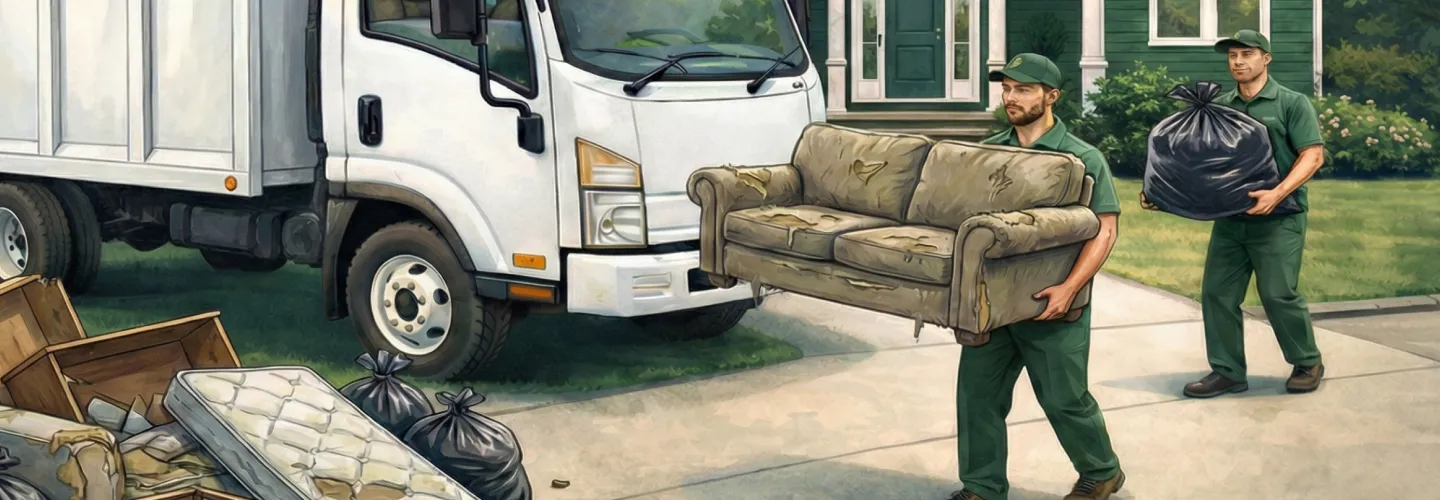
Sugar Hill Furniture Removal Services
Choose our furniture removal service for reliable, hassle-free pickups, eco-friendly disposal, and a team dedicated to making your move or cleanout effortless from start to finish.
Get a Free QuoteOur Sugar Hill Junk Removal Services
Furniture Removal in Sugar Hill, GA – Local Service Guide
Furniture removal in Sugar Hill, GA, is a year-round need for homeowners and businesses, with peak demand during spring cleanouts, summer moves, and after major life events like renovations or estate transitions. In neighborhoods like Barrington Estates and Arbor Closings, residents often replace old furniture or appliances, requiring careful planning for access—especially in homes with steep driveways or limited curb space. Options include donating usable items, recycling metal or electronics, or scheduling disposal through local haulers. For residential spaces such as garages or basements, seasonal storms and yard cycles drive cleanouts, particularly in areas prone to flooding or heavy tree coverage. Commercial clients in Sugar Hill’s downtown and shopping corridors face unique challenges, from discreet after-hours pickups for offices and restaurants to managing large volumes during renovations or property turnovers. Specialty projects—like estate cleanouts or construction debris removal—require advance coordination and compliance with local guidelines. For more on local waste management rules and resources, visit the Sugar Hill Public Works Department.
Key Considerations for Furniture Removal in Sugar Hill
- Timing around seasonal events and local move-in/move-out cycles
- Access challenges in hilly neighborhoods or limited parking areas
- Proper disposal channels: donation, recycling, or landfill
- Volume and category-specific handling (e.g., hot tubs, pianos)
- Coordination with city schedules and permit requirements
Benefits of Furniture Removal in Sugar Hill
Fast and Efficient Service
Eco-Friendly Disposal
Experienced Removal Team
Flexible Scheduling Options
Safe Handling of Furniture
Transparent Upfront Pricing
Coordinating Bulk Furniture Pickup with Sugar Hill's Public Works Department
Sugar Hill residents seeking to dispose of large furniture items should coordinate with the city's Public Works Department, which oversees solid waste management and municipal infrastructure services. Proper coordination ensures compliance with local collection protocols and prevents code enforcement violations. Key considerations for bulk furniture disposal include:
- Scheduling requirements: Contact Public Works in advance to confirm pickup availability and scheduling procedures for oversized items such as couches, dressers, and dining sets
- Curbside placement: Furniture must be placed at the curb in an accessible location that does not obstruct sidewalks, mailboxes, or fire hydrants
- Prohibited materials: Furniture containing hazardous components—such as chemically treated upholstery, lead-based paint finishes, or mercury switches—may require separate handling
- Volume limitations: Residents should confirm any per-pickup volume or item count restrictions before placing furniture curbside
Gwinnett County also operates transfer stations and recycling facilities that accept residential furniture. Residents should verify accepted materials and any applicable fees before transporting items.
Sugar Hill Public Works Department
5039 West Broad Street, Sugar Hill, GA 30518
Phone: (770) 945-6716
Official Website: Sugar Hill Public Works Department
Georgia's Solid Waste Management Act and Furniture Disposal Compliance
Georgia's solid waste regulations, administered by the Georgia Environmental Protection Division (GA EPD), establish the framework governing how discarded furniture must be handled, transported, and disposed of throughout the state. The Georgia Comprehensive Solid Waste Management Act (O.C.G.A. § 12-8-20 et seq.) requires all counties and municipalities to maintain compliant waste management plans. Furniture removal in Sugar Hill must adhere to these state-level mandates:
- Landfill disposal: Furniture may be disposed of at permitted solid waste landfills; however, metal components such as springs and frames should be separated for scrap recycling where feasible
- Illegal dumping prohibition: Abandoning furniture on roadsides, vacant lots, or waterways is a violation subject to fines up to $1,000 per occurrence under Georgia law
- Hauler requirements: Commercial furniture removal operators must comply with Georgia's solid waste hauler regulations, including proper vehicle registration and disposal documentation
- Stormwater protection: Furniture staged outdoors for removal must not obstruct drainage infrastructure or contribute to stormwater pollution
Residents and haulers should verify that all furniture is delivered to a GA EPD-permitted disposal or recycling facility.
Furniture Donation and Reuse Programs Serving Sugar Hill Residents
Before disposing of furniture in a landfill, Sugar Hill residents are encouraged to explore donation and reuse options that extend the useful life of items and support landfill diversion goals. Gwinnett County and the greater metro Atlanta area offer several furniture donation resources:
- Habitat for Humanity ReStore: Accepts gently used furniture including sofas, tables, chairs, bed frames, and shelving units; items must be in functional, clean condition with no structural damage or stains
- Goodwill of North Georgia: Operates donation centers throughout Gwinnett County accepting household furniture; large items may require drop-off at designated locations
- The Salvation Army: Offers pickup services for qualifying furniture donations in the Sugar Hill area; scheduling in advance is typically required
- Community reuse networks: Online platforms and local community groups facilitate direct furniture exchanges, reducing transportation and disposal costs
Donating reusable furniture reduces the volume of material entering Gwinnett County landfills and supports Georgia's waste reduction objectives. Items that are broken, water-damaged, or contaminated with mold or pests generally do not qualify for donation and must be disposed of through proper waste channels.
Sugar Hill Code Enforcement and Property Maintenance Standards for Furniture Removal
Sugar Hill's Code Enforcement division enforces property maintenance standards that directly affect how and when furniture may be staged for removal. Residents and property managers must ensure compliance with municipal codes to avoid violations and associated penalties. Important regulatory considerations include:
- Outdoor storage restrictions: Furniture left outdoors on porches, yards, or driveways for extended periods may constitute a property maintenance violation under Sugar Hill's municipal code
- Right-of-way clearance: Furniture placed in public rights-of-way, sidewalks, or roadways outside of approved collection windows is subject to citation
- Renovation debris: Furniture removed during home renovations may require coordination with Sugar Hill Building Services if the project involves structural modifications or demolition permits
- HOA coordination: Many Sugar Hill subdivisions maintain homeowners association rules governing curbside placement timing and exterior storage of discarded items
- Pest prevention: Upholstered furniture left outdoors can attract rodents and insects; prompt removal is essential to maintain neighborhood health standards
Residents should contact Code Enforcement before staging large quantities of furniture for removal to confirm compliance with local ordinances.
Sugar Hill Code Enforcement
5039 West Broad Street, Sugar Hill, GA 30518
Phone: (770) 945-6716
Official Website: Sugar Hill Code Enforcement
Safe Handling and Hazardous Material Considerations for Furniture Removal in Sugar Hill
Furniture removal involves physical safety risks and potential exposure to hazardous materials that require careful attention. Homes built before 1978 in Sugar Hill may contain furniture or built-in cabinetry finished with lead-based paint, which is regulated under the EPA Renovation, Repair, and Painting Rule. Key safety and material handling considerations include:
- Lead paint awareness: Painted furniture or built-in units from pre-1978 homes should be evaluated for lead content before disturbance; certified lead-safe work practices apply during removal
- Heavy lifting protocols: Large items such as sectional sofas, armoires, and solid wood tables require proper lifting techniques and equipment to prevent injury; OSHA guidelines recommend team lifting for items exceeding 50 pounds
- Upholstery hazards: Furniture exposed to moisture may harbor mold or mildew; appropriate respiratory protection should be used during handling
- Stairwell navigation: Multi-story homes common in Sugar Hill subdivisions require careful measurement of doorways and stairwells—standard interior doorways measure approximately 30–36 inches wide
- Property protection: Use floor runners, corner guards, and door frame protectors to prevent damage to walls, flooring, and trim during furniture removal
Sugar Hill Fire & Emergency Services can provide guidance on hazardous material concerns encountered during furniture removal projects.
What Neighborhoods Do We Serve Throughout Sugar Hill, GA?
- Sugar Hill Town Center: The city's mixed-use downtown core features townhomes and commercial spaces with shared parking areas. Furniture removal here may require coordination with property management for loading zone access and adherence to city noise ordinances during business hours.
- Whitehead Farms: This established single-family subdivision features homes with standard two-car driveways and cul-de-sac layouts. Wide residential streets accommodate removal vehicles, though HOA guidelines may restrict curbside staging to designated pickup days.
- Sycamore Estates: Larger lot sizes and mature tree canopy characterize this neighborhood. Overhanging branches and longer driveways may require advance planning for truck positioning during furniture removal projects.
- The Corners at Sugar Hill: A newer mixed-use development with townhome-style residences. Narrow interior streets and limited guest parking require careful vehicle staging; building access through shared entryways may necessitate advance coordination with neighbors.
- Peachtree Industrial Boulevard Corridor: Commercial properties along this corridor generate office furniture and retail fixture removal needs. Business licensing compliance and coordination with Sugar Hill Planning & Development may be required for commercial furniture disposal projects.
- Sugar Mill: A well-established residential community with traditional single-family homes. Standard residential access accommodates most removal vehicles, and proximity to major roadways facilitates efficient transport to Gwinnett County disposal facilities.